Missing Macungie

They say every cloud has a silver lining, and maybe this one did when it parked itself over my head back in August. The annual Das Awkscht Fest was coming up, a vintage toy and vintage car festival in Pennsylvania (see “Twists and Turns,” my Sept. 17, 2014 post, for more on this event), and I was getting jazzed as the time approached to jump in the car and head up there.

Except that I caught a cold the week before. Or maybe it’s the flu, we thought, as I coughed and wheezed and generally felt awful. After four or five days of this, I went to the doctor, who told me to go get a chest x-ray. “A chest x-ray? For what?” She told me they thought I might have pneumonia. My measured, thoughtful response to this was, “Pneumonia?! Not a chance I don’t get things like pneumonia I’m Joe Runner and healthy and strong as an ox and how could you possibly think I would ever get something like pneumonia?”

Off I went for the x-ray. Pneumonia. Even as my brain kicked into denial mode, my body begged to differ and I actually started feeling worse. I dragged myself back to the doctor’s office and told her that I had to get better in two days as I had an 8-hour drive to Pennsylvania ahead of me. When she asked if my trip could be delayed or postponed, I said no, that I was headed to the World Series of vintage toys and there was no way I was going to let some chest infection derail my pilgrimage to Mecca.

By the time I arrived home from the doctor’s, I could barely stand up.

Antibiotics, lots of coughing, lots of sleep, a little bit of work, some TLC from my wonderful wife, more coughing, and Macungie came and went (as did our plans to also attend a family reunion in New Jersey later in the weekend). I hadn’t missed the event in years, as it’s a great opportunity to visit with good friends and hunt for high-quality antique toys, and I stewed over it as I imagined the incredible deals that now would be had by other collectors. Attending an event and failing to score great finds is one thing, and that sometimes happens. But to not even make it to the starting line, well, that was enough for me to hold my own little pity party.

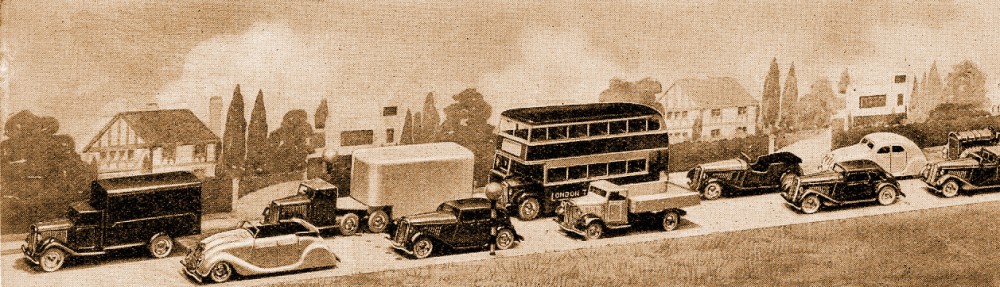
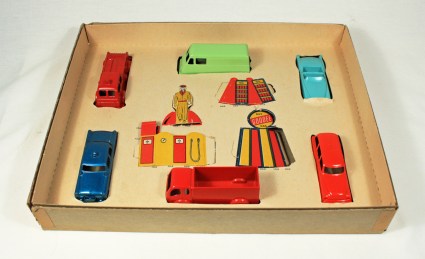
As August went on, I slowly regained my strength and recovered from the pneumonia. Then, just before Labor Day, I stumbled across a true rarity on Ebay: a mid-1950s gift set of Goodee cars and trucks, something I’d never seen for sale before. Goodee-Toys (yes, with a hyphen) were made for just a few years during the 1950s, and they were simple, one-piece die cast toys that nonetheless have bags of charm. The set on Ebay was complete with its original box and foldable service station with accessories.
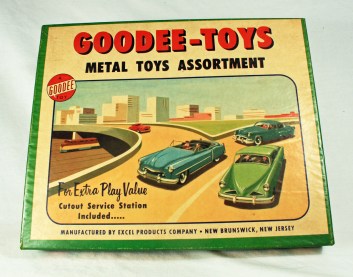
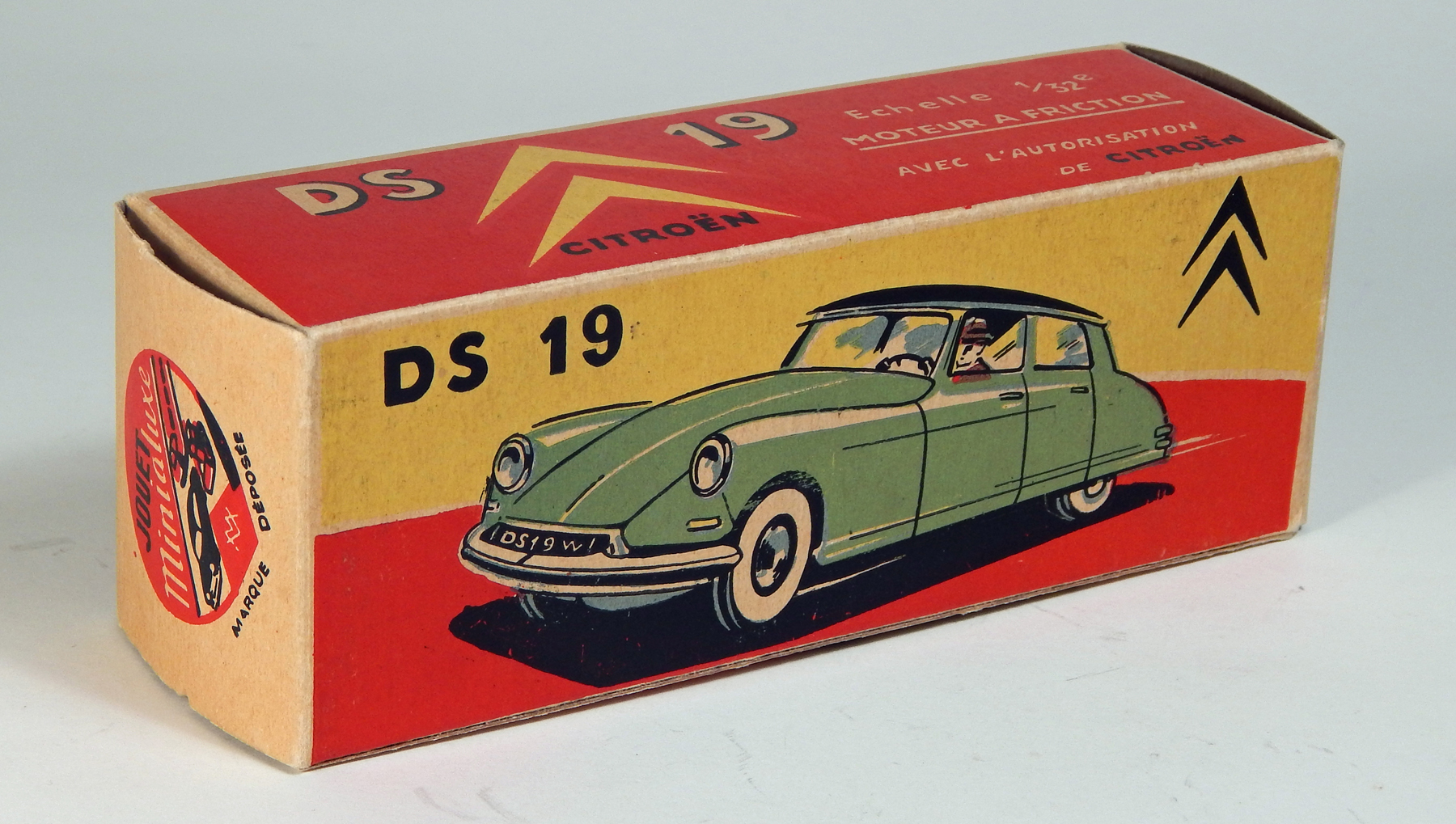
goodee1Goodees turn up far less regularly than Tootsietoys, Hubleys, and Midgetoys, and usually in battered condition. All but one of the models in this set were in perfect original condition. Along with the ultra-cool box art, the whole thing just screamed 1950s, and I knew I’d be bidding on this one.

As the auction wound down, the bidding stayed low at around $30. Then, an hour or so before the end, the bidding went up to around $60. I put in a bid of $72, prepared to bid again when the price inevitably went up. $72…$72…$72…5 minutes to go…$72…1 minute to go…here it comes, I thought…$72…the clock ran out… “the auction has closed and you’re the winning bidder at $72.” I refreshed the browser, unable to believe I could have gotten this set for just $72. But there it was, I was the winning bidder at $72, on an uber-rare toy that should have gone for $200 or more.

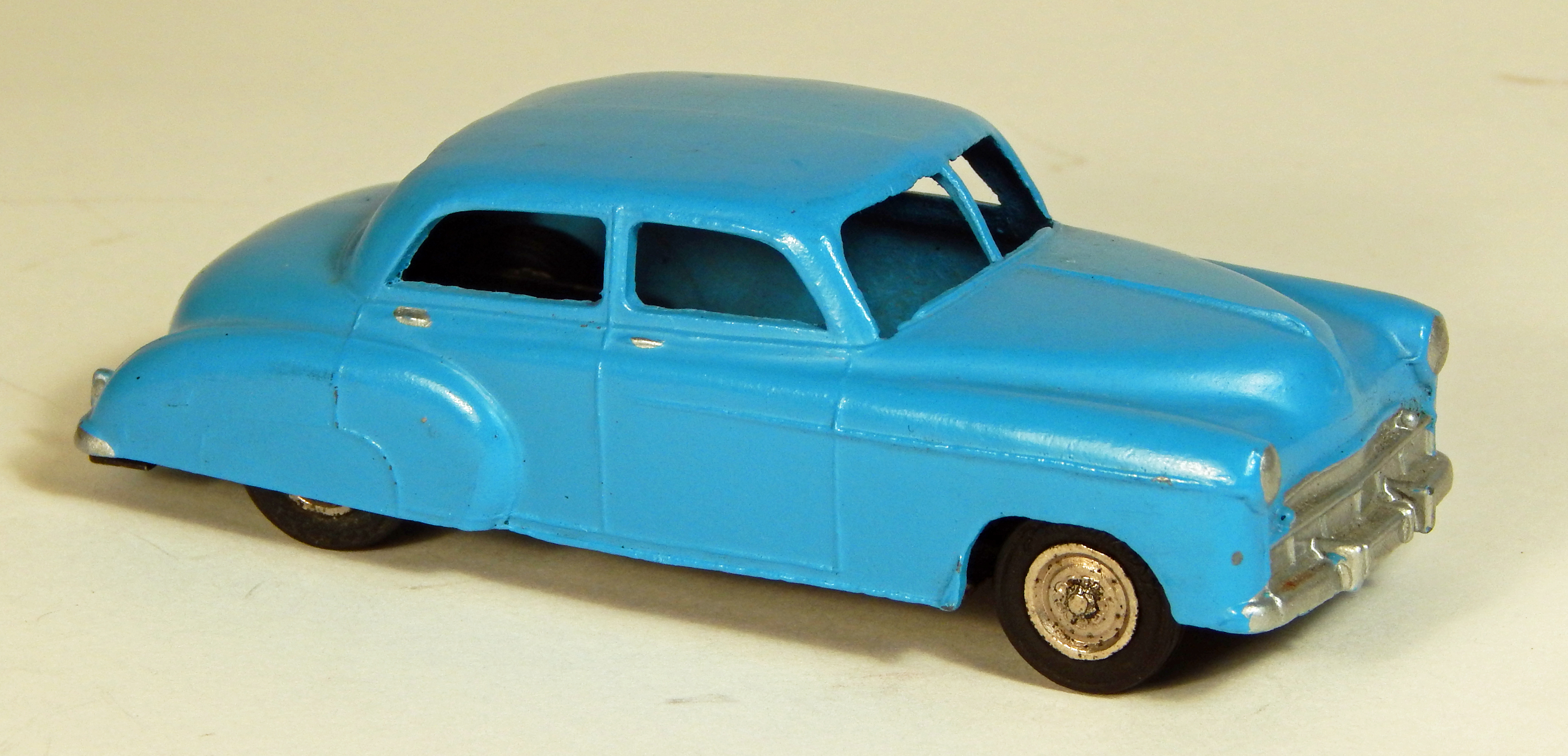
When itgoodee2 arrived in the post, I carefully checked every inch of the models and the box. Beautiful original condition and everything present and accounted for. I cleared a place of honor in one of our display cabinets, and then took the whole thing back out to photograph it for inclusion in a feature article on Goodee-Toys that I was writing for The Diecast Magazine. And yes, I ran the models along the desk as I crouched down and eyeballed them to see what they looked like as they drove by. The light blue Cadillac looked particularly righteous.
An incredible score, when I least expected it, and it took some of the sting out of missing that party in Pennsylvania. Silver linings.

Douglas R. Kelly is the proud owner of several Frank Robinson baseball cards, but not a single Rip Repulski. Which is kind of sad.

Hardwood, Hard Sell

Pete Prunkl’s feature articles on Warren McArthur’s amazing furniture (December and January issues of Antiques Roadshow Insider) really got inside my head. I tend to gravitate to the look of industrial design, and McArthur’s 1930s and 1940s products blend that kind of visual with art deco in a way that makes me want to re-outfit my office with his creations. Then I see that the price of one piece would break my budget, so I keep dreaming.

In terms of wood, when it comes to antique furniture, oak is probably my favorite. Mahogany and pine occasionally get on my radar screen (usually at outdoor shows when the sun is shining), but I grew up with oak, so maybe it’s in my DNA. My parents pursued, purchased, refinished, and loved oak furniture, and we’ve kept a number of those pieces in our family. (See my September 2014 post, “A Legacy,” for more on that part of our family’s history.)

But it seems oak has fallen out of favor, at least compared to its popularity 25 to 30 years ago. When we were helping my parents move to a smaller, more manageable home 7 or 8 years ago, my (now former) brother-in-law told us that oak was no longer in demand in the antiques world, and that, if my parents wanted to sell any of their oak pieces, they would find it slow going.

Naturally, I didn’t see things that way, and I wondered where my brother-in-law was getting his information. We talked about it once or twice, but I had the impression he was just repeating something he might have read or been told by an antiques person.

Turns out, he was right. This undoubtedly is old news to furniture dealers and collectors, but, according to my thoroughly unscientific research–meaning, based on what I see and hear at shows and auctions–oak has indeed experienced a slide in popularity, to the point where pieces that I would have thought were easy sells often sit and sit and sit. My mom and dad and I experienced this first-hand a few years back when we took a space at an antiques mall, to sell some of their collection. Despite having very good traffic and owners who talked up the items for sale, the oak pieces went begging.

Could it have been the recession? Maybe. But as far as I can tell, the trend has continued as the economy has recovered.

This distresses me. I love these tables and dressers and china cabinets and chairs. They have a look that’s just “right,” with that distinctive grain for which oak is known. My mom still enjoys oak (I think…maybe I should ask her), and, in some sense, these pieces keep my dad close to us. Living with (and using) the dressers and cabinets he worked on is a little like having him next to me, joking around and telling me about his next project and how he can’t wait to get to that flea market to see what turns up.

Late last year, we found homes for a couple of oak pieces that were gathering dust in our garage. One was a basic, but still nice kitchen table that saw daily service in our home for a number of years. The other was a beautiful, more decorative oak table Broken oak tablethat my parents had had in their home, and which, sadly, had been damaged while being moved from one storage facility to another. In fact, it looked as though a piano had been dropped on it: about a quarter of the main surface had been broken off along with the rim underneath. Strangely, the break wasn’t on a seam or existing crack; whatever had done the damage must have hit like a ton of bricks.

We didn’t bother hauling these to an antiques mall or putting them on Craigslist. We just wanted them to go to a good home, to someone who would enjoy them as much as we had. I contacted a local antique dealer (a couple of times) with whom we had done business in the past, and told her we simply wanted to give the tables to a good home, knowing that the more decorative one could be repaired and given a new lease on life. But the dealer never responded.

Intact oak tableThen I remembered a fellow who had repaired one of my parents’ oak cabinets a couple of years earlier, and we contacted him. He said he’d be happy to take them off our hands and scheduled a time to pick them up.

When he arrived, we talked for a bit. He agreed that the more decorative table could be repaired, and he told us he liked the tables very much. We loaded them into his van and watched him drive away, and I hoped my dad would be pleased that they would be getting back into circulation.

Douglas R. Kelly hopes that oak will make a comeback before Cabbage Patch Kids.

Jiggs

The January issue of Antiques Roadshow Insider features an article by Editor-in-Chief Larry Canale on recent auction sales of paintings by such artists as Andy Warhol and Georgia O’Keeffe. My college degree is in studio art, and I try to stay at least somewhat current on what’s happening in the art world, but the prices realized on high-end pieces like this blow my tiny little mind. A couple of the Warhol paintings sold for $82.9 million and $69.9 million, and a beautiful O’Keeffe painting of a white flower set a world record for a work by a female artist, bringing $44.4 million at a Sotheby’s auction in November.

More than 20 years ago, my friend Peter very generously gave me a number of things he had had as a kid, telling me he thought I’d give them a good home given my love of all things old. One of the items was a drawing of a character named Jiggs, from the comic strip “Bringing Up Father,” which was hugely popular during the 1920s and ’30s. Peter knew that I love anything related to comic books and comic strips, and the drawing really was right up my street, especially as it was signed by the strip’s (and the character’s) creator, George McManus. It was a wonderful image of Jiggs, showing the character walking in front of a cityscape and a bunch of cars that looked like they were…well, straight out of a comic strip. But I realized that it might be worth a fair bit of money if it were authentic, and I told Peter as much. “If this turns out to be an original McManus, and I manage to sell it, you’re getting half.” But he told me to forget that, that if it did sell, I should enjoy the windfall. And if it wasn’t the real thing, well, he said I could still enjoy looking at it or selling it to someone else, whatever I liked.Jiggs drawing

That was typical of him; Peter is a great friend and a truly fine fellow. (And as down-to-earth as they come. If he reads this, I can just see him shaking his head and muttering “Good grief, get on with it.”)

Despite my initial enthusiasm, it took me a couple of years to get around to having the thing appraised. I finally lined up an appointment with a comic art expert at Christie’s auction house in Manhattan, and my brother, Brian and I hopped on the train and headed into New York.

The Christie’s facilities are designed to impress, and it worked on me. We were asked to wait in a sort of conference room/workspace that had a number of imposing prints and paintings on the walls and on work tables, and I found myself getting nervous as Brian and I walked around and looked at these rather amazing works of art. Finally, the appraiser came in, we made our introductions, and I unwrapped the McManus drawing and placed it on a table.

The appraiser said “Hmmmm” several times as he examined the drawing, and I could tell that he was disappointed. He explained to us that it actually was not a drawing at all, but a print; and he pointed out the “clues” that indicated it was a print, including the fact that the back of the paper was completely smooth. If it had been a drawing, the back side of the paper would have raised edges made by the pencil or pen as the artist worked on the image on the front.

It was, nonetheless, by George McManus–that is, the original drawing from which the print had been made had indeed been created by McManus. But as a print, it had little monetary value, certainly far less than if it were an original McManus drawing.

The appraiser added that the color inks may have been applied by McManus himself, but there was no way to verify that. Strangely, I don’t recall whether the appraiser told me anything about the signature; it does resemble the way McManus signed much of his work, but like the rest of the image, the signature appears to be a part of the print.

Brian and I thanked the Christie’s people and made our way back to Grand Central Station for the trip home, and I confess I felt a letdown. Although I knew the piece could be a fake, I had hoped it was an authentic George McManus, as his work fetched respectable money even 20 years ago. Not on the same planet as a Warhol or an O’Keeffe–think several less zeros–but it had been kind of exciting to think that I might have an original piece of comic and popular culture history.

Still, it’s a wonderful image of Jiggs, and I’ve always liked it. Seems to me it’s appropriate as we get ready to celebrate New Year’s Eve…doesn’t it look like he’s headed for Times Square to watch the ball drop with a few hundred thousand close friends?

Douglas R. Kelly looks forward to celebrating New Year’s, but admits he won’t look nearly as dapper as Jiggs.

Thirty-Three and a Third

Thanksgiving this year was a great time for our family. We traveled out to the Carolina coast to spend the holiday with my brother and sister and their kids and had a fun and relaxing few days. On the Friday–Black Friday–we all went into the nearby village to explore and maybe do a little shopping. There was an antique shop on a little side street, so my wife (Laura) and daughter (Caroline) and I went in to see what was what.

We got separated for a bit as my girls poked around the back part of the shop while I checked out the merchandise by the front door. After a while, I went back where they were and found Caroline looking through a bin of record albums. “That’s cool,” I thought as she pulled one out and said it would be a perfect Christmas gift for her friend. Seeing the vinyl LPs brought back good memories and I loved that our girl was connecting with these artifacts.

Except it wasn’t an artifact. The album Caroline was holding was by the band Vampire Weekend and it was new. As in, recently released and still in its shrink wrap. I knew that turntables are still being made by a few companies, but I guess I figured they were for people who want to play their old albums. The fact that music still (or again?) is available on vinyl somehow had escaped me in this world of digital media. I must have been staring at the album, trying to work out why it was shrink wrapped, when Caroline asked if anything was wrong and I said no, no, looks like a good album and your friend will like it I’m sure and why in the world is it shrink wrapped?

So my daughter brought me up to speed on record albums and how you play them on a turntable.

Let’s see. An antique shop that, along with the old and the vintage, carries new objects that resonate with an old and vintage vibe. In a sense, the old and vintage are the same as the new, at least in terms of form and function–if not actual content.

But even that is covered in the case of a long-time artist or band that releases a new album on vinyl along with CD and digital versions. I could buy Eric Clapton’s or Keb Mo’s newest work on vinyl and then play it on my old turntable that I think must be somewhere out in the garage.

Christmas is just a few days away and maybe Santa is reading this. I can dream.

Douglas R. Kelly is a little freaked out by the fact that he’s nostalgic for something that’s still around.

Box Fixation

We may live in a digital age, but paper still pushes my button. It’s a big part of the collecting life, isn’t it? Original product catalogs that list model numbers and colors, magazine advertisements showing the objects of our desire, even ink blotters that companies used to hawk their wares to the buying public. These things fill in the gaps in our collections and often give us a wonderful peek into the time and space these things first occupied.

Box2

And then there are boxes. I’ve heard other collectors complain that some of us are too hung up on hunting for items in their original boxes, that we’re obsessed with finding artifacts that are as perfect as possible. Guilty as charged. I’d like to think it goes back to when I was a kid, and the wonder and excitement I felt when I was given a gift at Christmas or on my birthday; sure, I did my share of tearing toys out of their packages and tossing the mangled cardboard into the trash, but I also have memories of especially colorful or beautiful boxes, too. I thought the box (the square one, not the vertical) for Aurora’s plastic model kit of The Mummy was about the coolest thing I’d ever seen, and I would have papered the walls of my room with Corgi boxes if I a) had had more than 10 cents in my pocket and b) was willing to be grounded for life.

Box1

It’s more likely I’m just a picky fussbudget with condition issues. I confess that I love discovering and acquiring and living with objects in their original condition and in their original packaging. And yes, occasionally selling them as well, which of course is far easier to do when the item doesn’t look like five miles of bad road. An original box, or blistercard, or bag, or whatever, usually makes for a great display with the item; this is particularly true with antique toy and model cars, which more or less demand to be displayed on top of their boxes and with sufficient lighting, thank you very much.

Box3As long as we’re getting in touch with our inner children, let me also state for the record that old boxes smell great. Well, usually. Don’t believe me? Open up one of those puppies and take a whiff…unless the box originally housed a food product (and even those settle in over time), odds are it will have a deliciously musty odor that flat out screams antique. Must be a result of being closed up for all those years, or perhaps cardboard reacts chemically with oxygen to gradually age and mellow, like a fine wine. Or maybe it’s the Doppler effect. I have no idea, but I can tell you I’ve gotten more than one strange look doing this at shows and in antique shops. Seems to me that those strange looks would turn to nods of knowing approval if people would just give the sniff test a try. At least they could humor me.

Douglas R. Kelly thinks we all should save the boxes that our smartphones come in, making life for 23rd century collectors just that little bit easier.

Bonehead Moves

Fakes, damaged items, missed opportunities, I’ve made my share of mistakes over the years on the collecting trail. One, in particular, comes rushing back any time I see a gumball or candy machine, which happens often as I tend to be on the lookout for the things. I spotted a beautiful-looking Wrigley’s gum/Lifesavers 5-cent machine a few weeks ago, early in the morning at an outdoor show, a machine made by Shipman in the 1940s. The seller shocked me when he said he wanted just $30 for it. “How about 25?” I asked him, and he said yes. I got that thing back to my car in record time and tucked it safely under a blanket between the seats. Later examination confirmed my initial impression that it’s original and needs just a bit of TLC to put it back in working order; a bargain that made the whole show worthwhile.

But as I was looking over the Shipman, I suddenly thought, “Good work hot shot, but remember the Abbeys?” As if I could forget them. Years ago, a friend and I would get up early on Saturdays and hit as many tag sales (or yard sales as they call them here in the South) as we could before the money (or the coffee) ran out. One morning, we found ourselves stopping in at a junk shop that was stuffed full of, well, junk. Finding nothing of interest on the main floor, we headed down to the basement of the place. It was dank and dusty and pretty disorganized, so we started poking around the piles and stacks, hoping to score something good.

Near the center of the room, I saw two small gumball/peanut machines sitting on a living room side table. They appeared to be identical, although as I started examining them, I could see differences, especially in condition. One was in decent shape and appeared complete, while the other showed clear signs of heavy use over the years. They both were made by Abbey Manufacturing Company in Los Angeles, probably in the 1940s, and both were mounted on chrome trays that served to catch stray gumballs or peanuts.

My friend came over and said, “You should buy both of them, they’re great.” She was right, given my interest in vintage vending. I don’t recall what the price was, but it couldn’t have been much given the surroundings. So what did I do? I said, “Well, if I buy them, then I’d have one good one, but I’d also have one that’s a wreck and missing parts…I’ll pass.”

[Insert blank stare here.]

Was I having a stroke? Earth to Doug: These are ABBEY GUM MACHINES, and you can use one as a “donor” machine to complete the other and with a bit of work, you’ll have an amazing piece for your collection. Doug? Hello? Is anyone home?

I have no idea what I was thinking. My friend and I walked back upstairs and out the door and I’ve regretted it ever since. Those Abbeys pulled up a chair and sat down in my head and refused to leave no matter how nicely I asked.

Maybe I balanced the scales just a little with my Shipman score a few weeks ago.

Douglas R. Kelly is saving his pennies, just in case this cashless society thing actually happens.

Before Selfies

YorkTrailerphotoTake a look at the above photo. Likely taken in the mid-1930s, it shows people checking out travel trailers, which had recently gone from almost non-existent to red-hot, nearly overnight. Companies all over the United States began producing the things, and Americans were buying them—maybe these folks were among those new owners.

An historic image? Perhaps, if you define historic as anything that happened more than a year or two ago. It is at least an intriguing photo, especially for classic car collectors and fans of old travel trailers. But is it a type 1 or a type 2? Or is it a 2nd generation photo?

I didn’t know what these terms meant until just recently, when I got to talking about old photos with Matt Peedin, a friend who has developed a passion for the things. He showed me a photo he had recently purchased, taken in the early 1960s, of Martin Luther King, Jr. being arrested. Matt said that he was so struck by King’s expression and demeanor in the photo that he had to have it: Despite an aggressive-looking man (a police officer, I guess) yelling at him from just a few feet away, the civil rights leader looked calm and serene, the very model of grace under pressure.

Matt explained that the photo was a type 1, a designation used by authentication service PSA to indicate that a photo is a 1st generation photo, developed from the original negative, during the period (within approximately two years of when the picture was taken). Types 2 through 4 denote photos developed later and/or developed from a duplicate negative or wire transmission.

Because of their vintage and originality, collectors consider type 1s to be the most desirable and valuable of the four types.

Matt, who works as a realtor to support his habit, got started with old photos as a result of collecting autographs of ballplayers who are in the Baseball Hall of Fame. He found himself bidding in an online auction, on a photo of Detroit Tigers baseball legend Ty Cobb sliding into a base. He told me, “The bidding got really serious and went up past what I would pay, so I didn’t get that photo, but I was hooked. These things let you see the past in a cool way…what’s really fascinating, I think, is really old photography…19th century images. You can look at a person who’s been dead for many, many years, and wonder who they were and what their life was like.”

PSA’s site, http://www.psacard.com/Services/PhotoProcess, lays out the various types of photos, along with an explanation of the photo authentication process. Matt also tells me that those interested in vintage sports photography should get to know the name Henry Yee (http://henryyeephotos.com/), who is a major player in the category. If you’re a fan of the game’s history, Yee’s early images of iconic ballplayers will knock you out.

This is an incredibly cool area of antiques and collectibles and I’m learning as I go. My picture of the travel trailers is probably not a type 1 (or 2 or 3, for that matter), but learning from Matt is hugely fun and I have to admit, I’m kind of getting hooked.

Douglas R. Kelly owns a 1961 Topps card of Detroit shortstop Coot Veal. Seriously.

Czech Out this Score

When our girls were young, our family lived for several years in Maryland, just outside of Washington, DC, and it was a hotbed of antique toy collecting. Seemed like there were more collectors in that Maryland/DC/Northern Virginia corridor than I’d seen anywhere else. However, one of my collecting friends, Ed, lived in South Carolina, and we visited whenever our travel schedules allowed.

I was preparing to head out to a business conference in West Virginia when Ed called and said he’d be coming through our neck of the woods the following day on the way to visiting family up north. He told me he had a few things for me to look at and apologized for the short notice, then asked if I’d like to get together. I had purchased a couple of old toy cars from Ed in the past and I knew he was a long-time collector of the good stuff, so I’d have said yes if he’d asked me to meet him at a biker bar in a tux and tails. I told him we’d expect him for dinner the following evening and then spent the next 24 hours wondering what it was he thought I should see.

He arrived carrying a cloth-covered tray of some kind, and I wondered if he had brought us dinner. After hellos and handshakes, we sat and got caught up with one another as that covered tray sat on our coffee table. After dinner, we returned to the living room, where Ed told me he was selling off his collection and wondered if I’d be interested in some of the pieces.

He pulled the towel off the tray as I tried to avoid hyperventilating. He said, “I generally stuck to the European and British manufacturers when I started doing this back in the late ‘50s, so that’s a lot of what’s here.” In other words, right in my wheelhouse. The toy and model cars in the tray ranged from early post-war Dinkys to models made in Israel to mint boxed Japanese treasures. Ed had bought and/or been given the toys as a young guy and he had kept them in exceptional condition ever since.

Over in the corner of the tray, encased in bubble wrap, was a blue Belgian die cast metal piece that I had never seen before. We unwrapped it, and I could see it was modeled on a late 1940s CheGasqui3vrolet sedan, but I couldn’t place the manufacturer. The tin baseplate had a capital “G” in a circle, along with the words “MADE IN BELGIUM,” and after a couple of minutes, I made the connection. This was a Gasqui (or Gasquy, as it was sometimes spelled), an obscure and now very rare brand made during the late 1940s to early 1950s. The model was in excellent condition, and the accounting side of my brain started wondering whether I could get along with just one kidney.

“There’s another one in there, too,” said my tormentor as he dug out a second bubblewrapped lump and placed it in front of me. I think I actually gasped when I saw what it was, as I had heard of this model but had never actually seen one in the flesh. It was a Tatra 600, also called the Tatraplan, based on the legendary (and innovative) Czechoslovakian car of the late 1940s. Like the full-size Czech icon, this one had the centrally-mounted rear fin and the distinctive art deco design, and it was in superb original condition.Gasqui1

Now I was sure I was dreaming, so I asked Ed why he was selling these exceptional rarities. He told me that he couldn’t keep them forever, and he thought it was time for someone else to enjoy them.

Ed was a friend, so I told him that the Gasquis were worth far more than what I could pay for them. He said “That’s not really important to me…I just want these to go to a good home, to someone who can appreciate them and their history.” I told him that I thought they were wonderful pieces and that I would love to have them in my display cabinet, but that he could sell them at auction for a whole lot more than what I could pay.

He said, “Nah, that’s not for me. What do you think, how about $75 for the pair?” I could see that he wanted me to have them, and after asking him if he was sure this was what he wanted, I told him I’d be thrilled to do the deal.

In the years since, I’ve seen several worn (and repainted) examples of the Chevrolet go for $125 to $200, but the Tatra takes the cake. They rarely turn up for sale, but when they do, examples in this condition bring anywhere from $700 to $1,000. A great score for me, no question; but seeing them in my cabinet reminds me that I’m grateful that Ed entrusted to me these little pieces of history.

Douglas R. Kelly recently began collecting buttonholes.

The Condition Thing

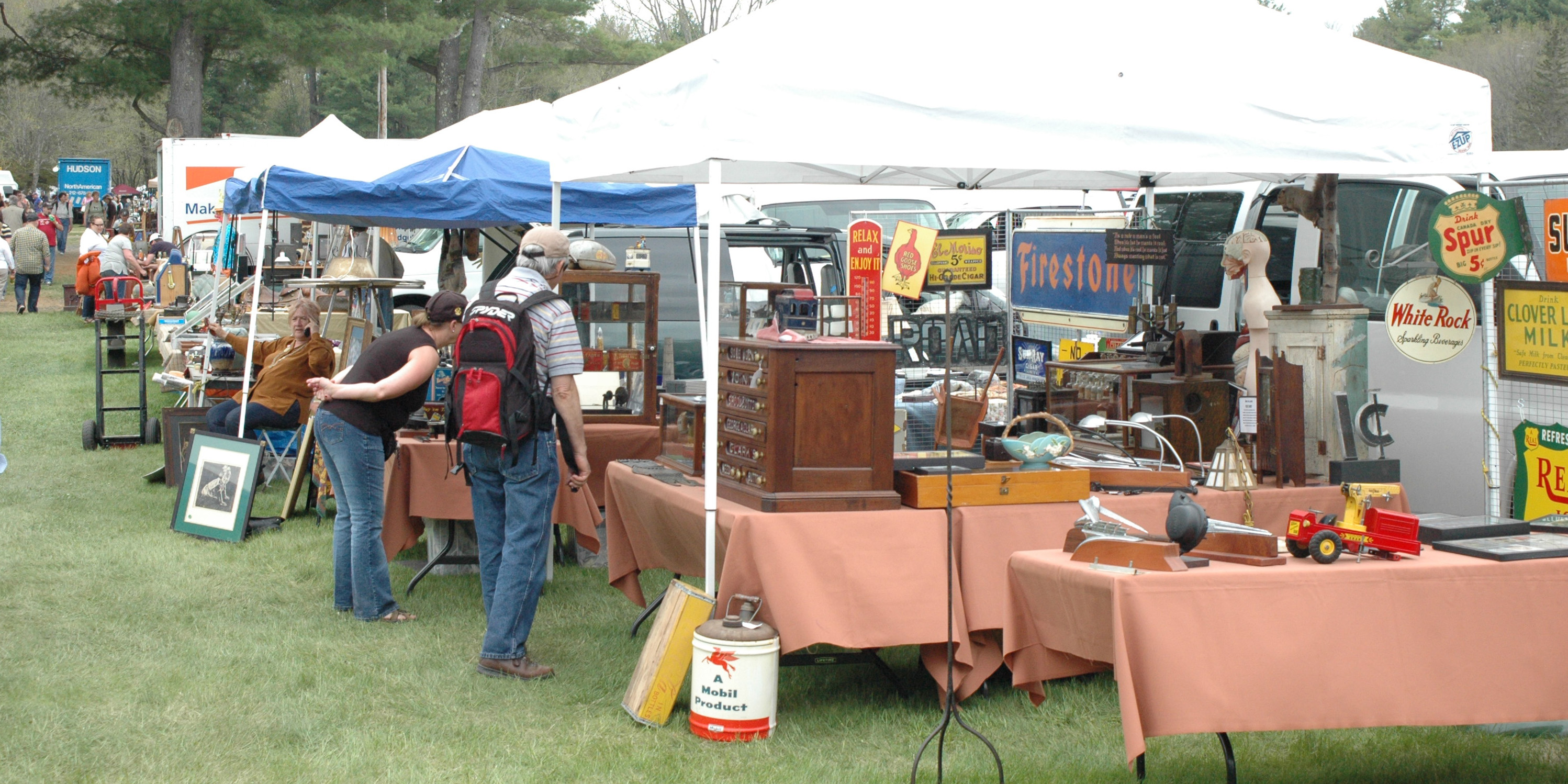
Show picFunny the things that your mind comes up with when it’s in neutral. My wife and I took a couple of booths at an outdoor flea market here in North Carolina last weekend, hoping to sell off a few older items and lighten the load. My mom came along and helped staff the booth too, as she had more than a few antiques from her own collection with which she wanted to part. (See my Sept. 19 post for more on that collection.)

As things slowed down after a couple of hours, I began keeping track of people who noted/asked about/complained about condition. Now, my wife and daughters can give you chapter and verse about how picky I am when it comes to originality and condition, whether of a 19th century lamp or a toy car made in the 2000s. I prefer to think of myself as a discerning collector; but truth be told, I’m high maintenance in this area. In others too, to hear my family tell it.

Some folks didn’t seem to care if the item they were buying from us had a giant hole punched through the center of it, or that one corner of the blistercard packaging was slightly softer than the others. Several of them made counter offers to the marked prices, but many of them didn’t say a word about damage or wear and tear.

Then there were those who listed every flaw for me, pointing out missing parts and frayed electric cords with obvious pleasure. One guy came in and picked up a heavy 1920s electric “cage” fan we had sitting on the pavement near the front of the booth. He asked me if it worked, and I told him we didn’t know as there was no way we were going to plug in the tattered power cord to find out. He said to me “Do you mind if I go plug it in to test it?” I was momentarily befuddled by his question as we were outdoors, but he was off on his quest before I could answer. I wondered if I would ever see the fan, or the guy, again.

He returned a few minutes later with a disappointed look, telling me “The fan’s gettin’ power, but the motor’s froze up.” As he set it back down in the booth, he picked up an iron apple corer that my mom had on one of her tables and said “Can you do any better on this? Look here, somebody musta broke off the original piece that attached to the table and welded this thing in its place…and this part over here is just plain missing…”

I knocked a few dollars off the price, and the guy bought the corer. And I realized that I enjoyed the back and forth and the debates about condition more than a straight sale where the buyer just handed me money. There’s something about that interaction, about that give and take, that just feels right. It made it a good day at the show.

Douglas R. Kelly is no longer in mint original condition, but maybe that’s over-rated anyway.

A Legacy

There’s no doubt our environment plays a huge role in determining who we are, but so do our genes. Seems to me that, if I had been born and raised in Eastern Europe or the Pacific Islands, there would have been a good chance that I wouldn’t have become a collector of old things. On the other hand, if my father had anything to say about it, antiques and artifacts would have been all around me even if we had lived at the Arctic Circle.

Robert Kelly loved the hunt, and hDad and dressere loved bringing old things back from the dead. Ask my mom, and she’ll tell you how my dad could spot an early 20th century oak dresser hidden under three layers of bad paint, from the car as they were still pulling up to a tag sale. That’s him to the left, happy as can be after my brother had just given him a dresser for Christmas, scoring huge points with the old man. That particular one looks as though it didn’t need much to get it back into service, but many was the hour my dad spent repairing, refinishing, and restoring dressers, tables, chairs, and electric fans.

And flashlights. Did he love old flashlights. He would show me his latest find with a grin on his face, demonstrating how a nine-inch Winchester made in the 1940s put out just as strong a beam as that new plastic job sitting in the closet. FlashlightsIt got so he had me looking for these things at shows and tag sales, and they grew on me to the point where I now have a couple of them in my own collection, although I wish they were still a part of my dad’s collection.

He passed away three and a half years ago and there are days when I miss him so much that it’s like a physical ache. My mom tells me she feels that too; I lost one of my best friends, but she lost the love of her life. For the last couple of weeks, the two of us have been digging through bins and boxes, dusting off and pricing many of their antiques in preparation for selling them at a show this coming weekend. It’s been a revelation for me. Not every piece has a story behind it, but many of them do, and they often involve my parents digging the item out of the back of some dealer’s truck just after dawn at a show somewhere in New England, where they either got it for a song or paid more than they should have just because it would look great in their den.

The thing is, all of these wonderful stories involve both of them; I’ve yet to hear about my dad finding a great piece when he was off somewhere on his own. They did all of this together, and that brings these objects to life for me. I’m learning all over again that my parents truly were a team, best friends who loved each other and loved going after the old stuff.

We’re selling a lot of it, but of course we’re keeping the special pieces. There are several of my dad’s oak dressers doing daily duty in our house, and the flashlights my mom has given me work as well as they did when they were new. It’s a far cry from having him here. But somehow, it helps.

Oh, by the way Pop…that five-inch Royal with the square reflector has me stumped. What should we put on that one?

The “R” in Douglas R. Kelly is for Robert, his dad’s name. That must be why he’s hooked on the old stuff.